
JOURNAL 02
Five Artists i wish I learned about in school (but i’m happy i know now)
At the beginning of 2026 my partner Malcolm and I moved to Edinburgh for a couple months before hauling it to the Isle of Mull. During that brief stint in the city, one of the first things we did was get ourselves library cards, that way we could take out those big fat books that are impossible to travel with. I took out a wonderful hardcover yellow book that read, in bright red “THE STORY OF ART”, and in faded white text underneath, “WITHOUT MEN”.
I had taken introductory art history courses, art criticism, museum studies, painting, photography, to name a few. I learned about the men who paved the way, with a few women speckled in the mix. Some of my professors did highlight female artists such as Artemisia Gentileschi, Judith Leyster, Mary Cassatt, Gwen John, the ninth street women, Yoko Ono, Alice Neel, Francesca Woodman, Cindy Sherman, Sarah Lucas, Tracy Emin and Gillian Wearing. But the way my education was structured they often made it seem that these successes were an anomaly. To read The Story of Art Without Men I got to see the story of art through a completely different lens, one in which women are no anomaly. They are present, making groundbreaking work over and over again.
This is a list of five artists that I learned about in this book. They are artists that I had never learned about before. I’ve chosen them to list here because I was absolutely dumb-founded that no one had taught me about them in my survey courses and instead either cast aside their art form completely (such as quilting) or replaced them with their male counterparts such as Duchamp, Pollock, Warhol, Giacometti. Not to say that these artists did not make important work, but to highlight the systematic issue of collecting, archiving, and displaying female artists.
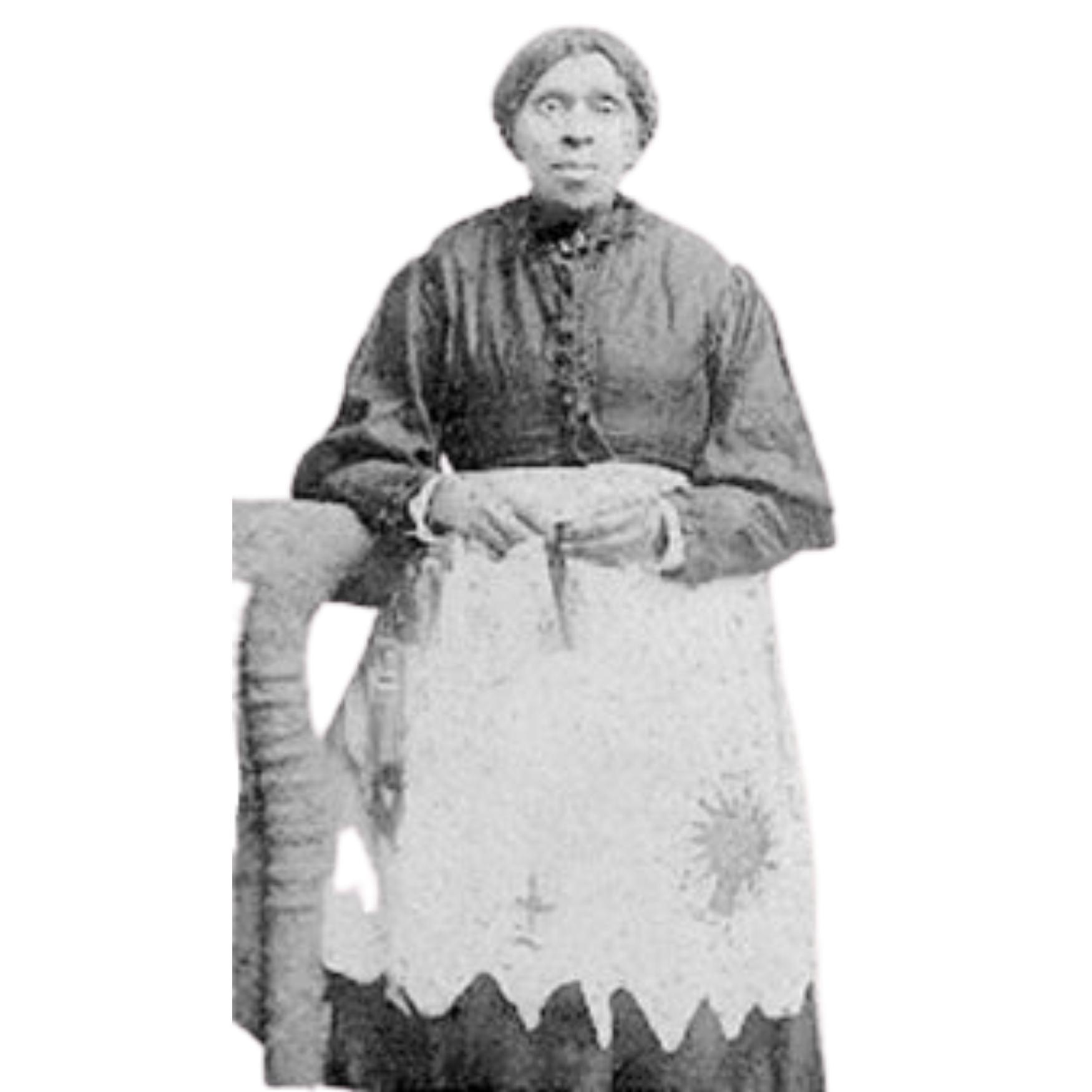
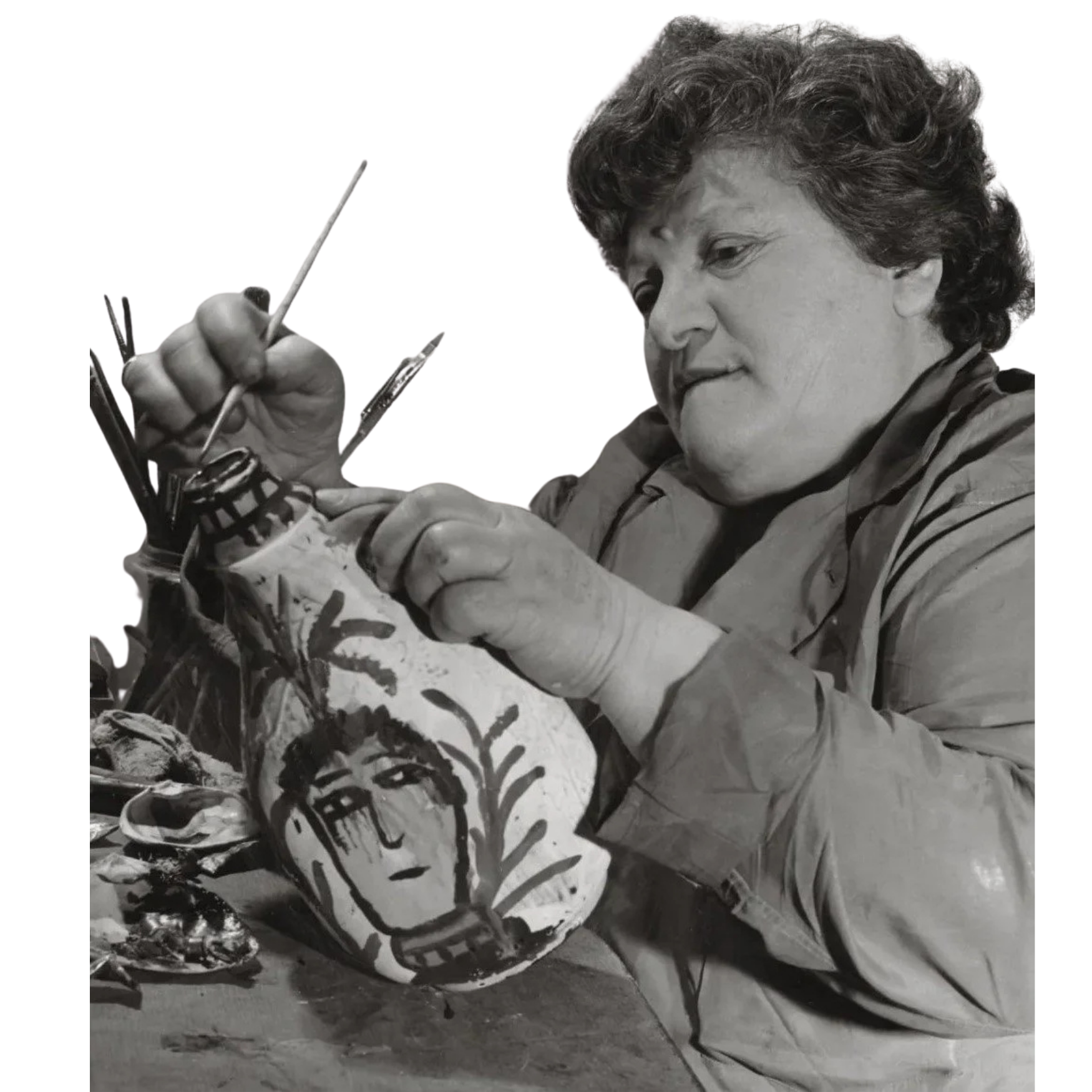
Harriet Powers (1837-1910)
1
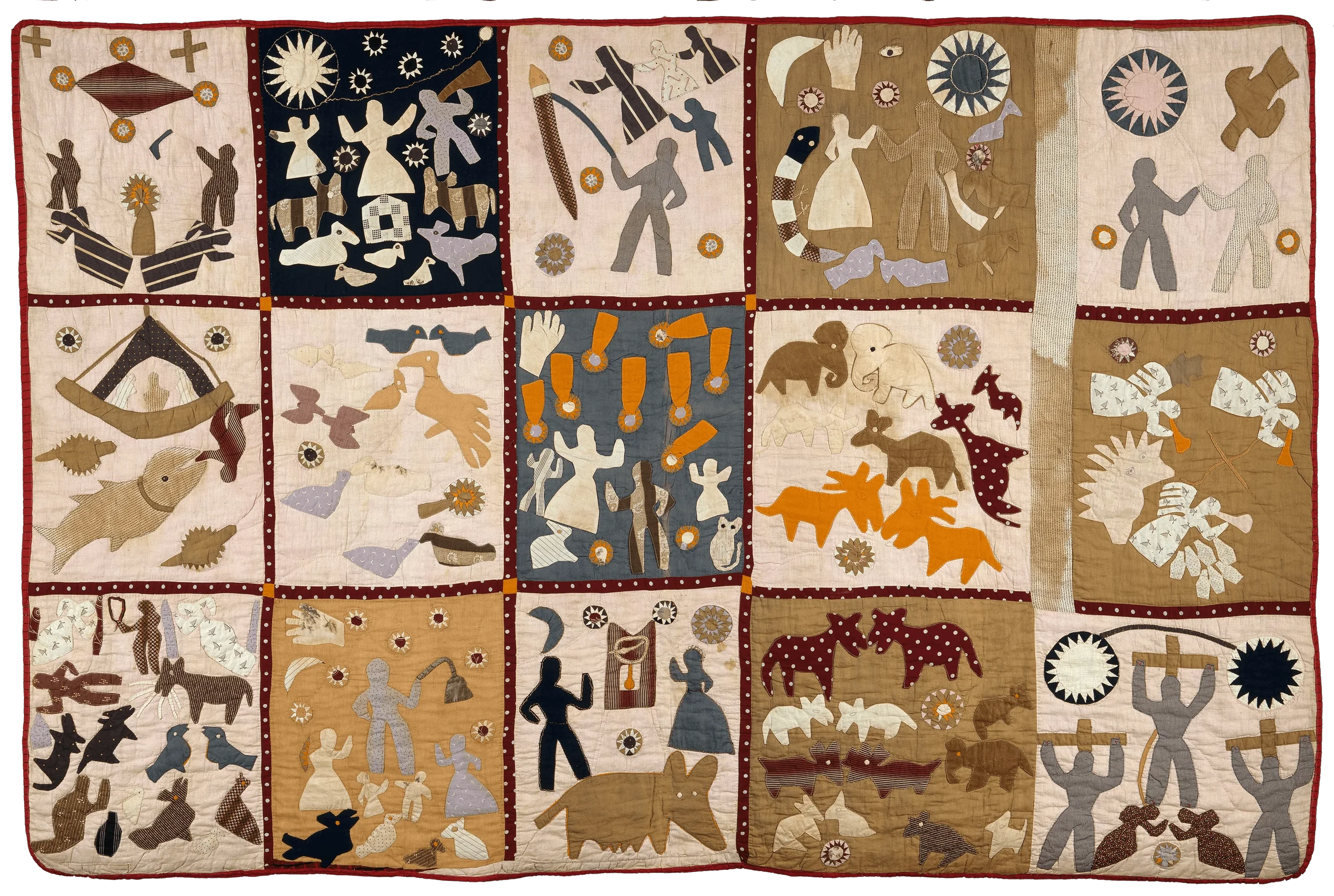
Pictorial Quilt (1895-98)
Powers was an African American artist born into slavery in Georgia. She was an exceptional quilter, her quilts were revolutionary as she was not using the medium to create geometric patterns but she was using them to tell stories in panels. Powers brought to life folklore, biblical scenes and even extreme weather. One of her most notable quilts, Pictorial Quilt depicts “the falling of the stars” on November 13, 1833 in the blue centre panel, which documents the Leonid meteor storm. I love Powers' use of colour to create a cohesive design and the fact that the storytelling component is sewed into a blanket, an object that could protect you from the extreme weather and the falling stars she illustrates in her quilts.
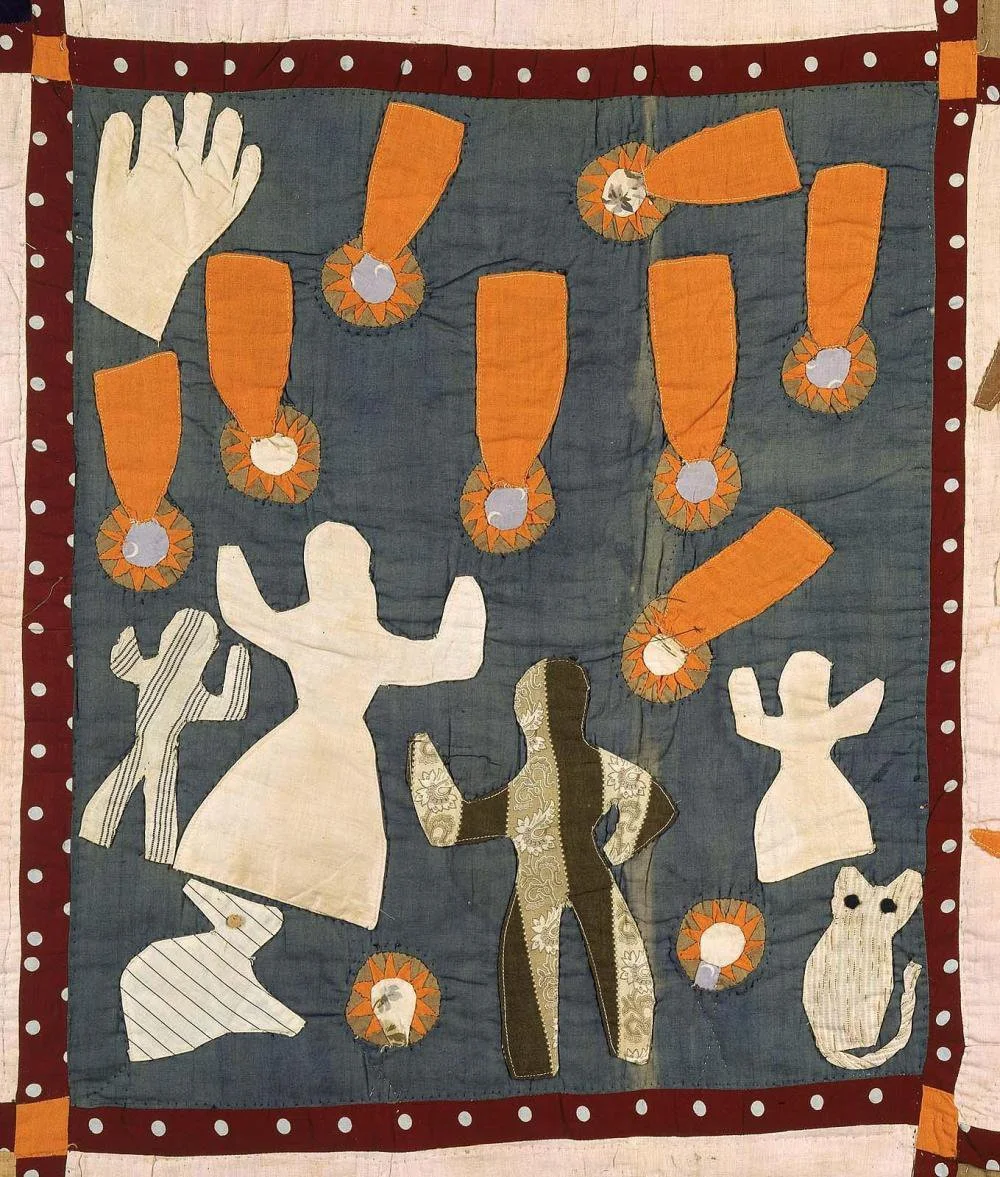
“the falling of the stars” panel depicting the Leonoid meteor storm.
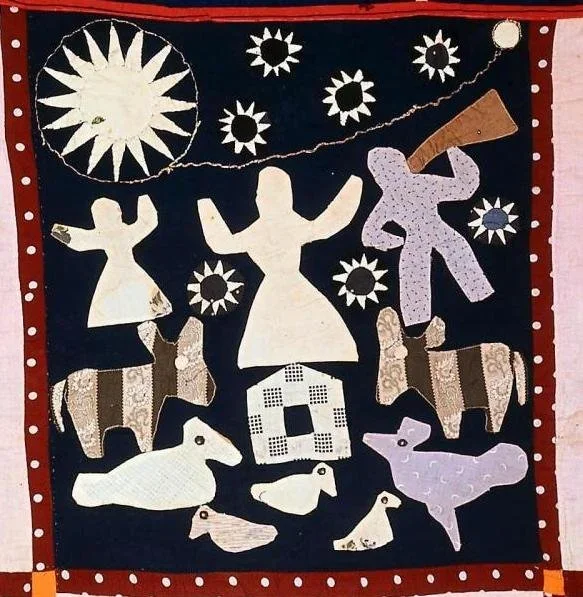
“Cold Thursday” panel depicting Florida’s great freeze in February 1995.
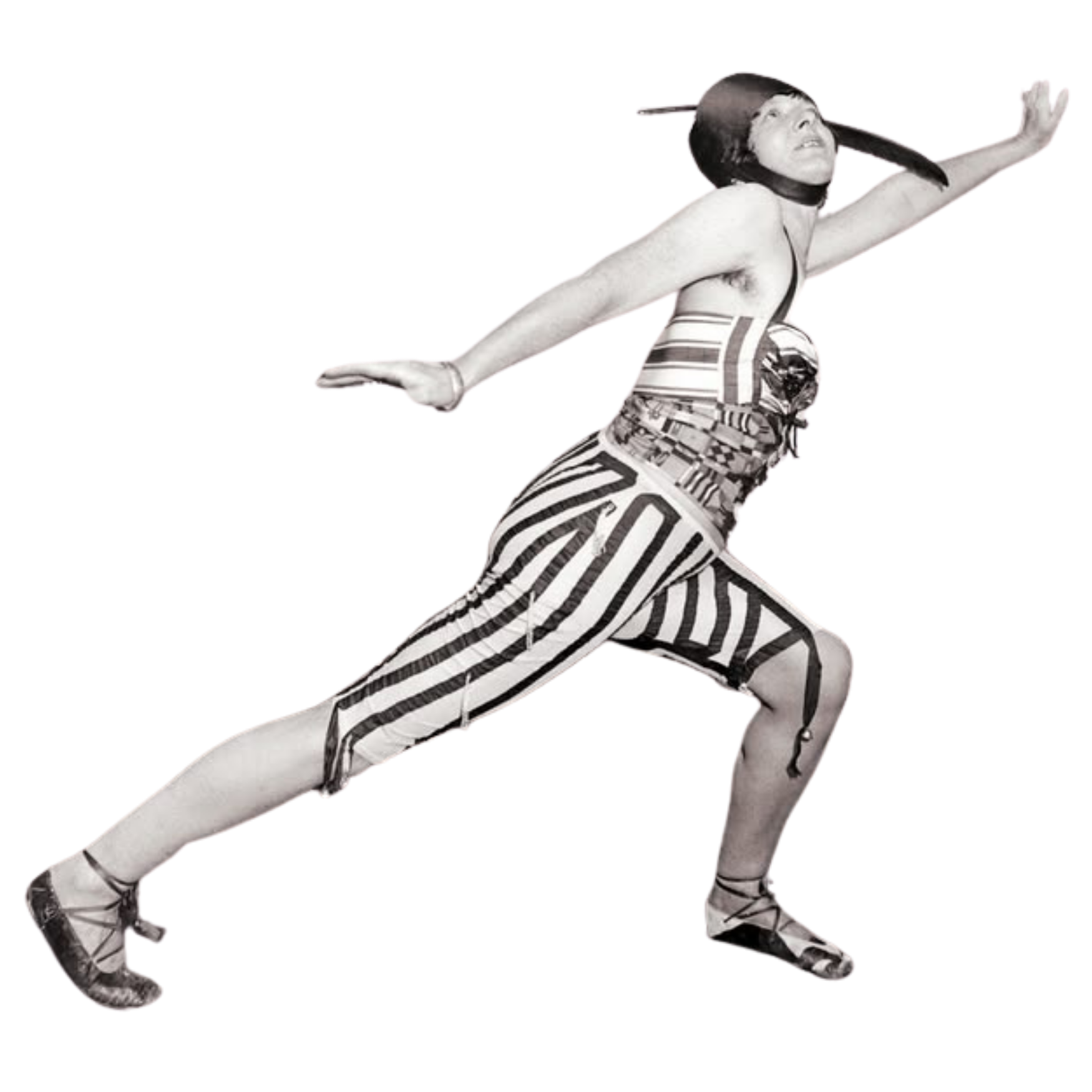
Baroness Elsa von Freytag-Loringhoven (1874-1927)
2
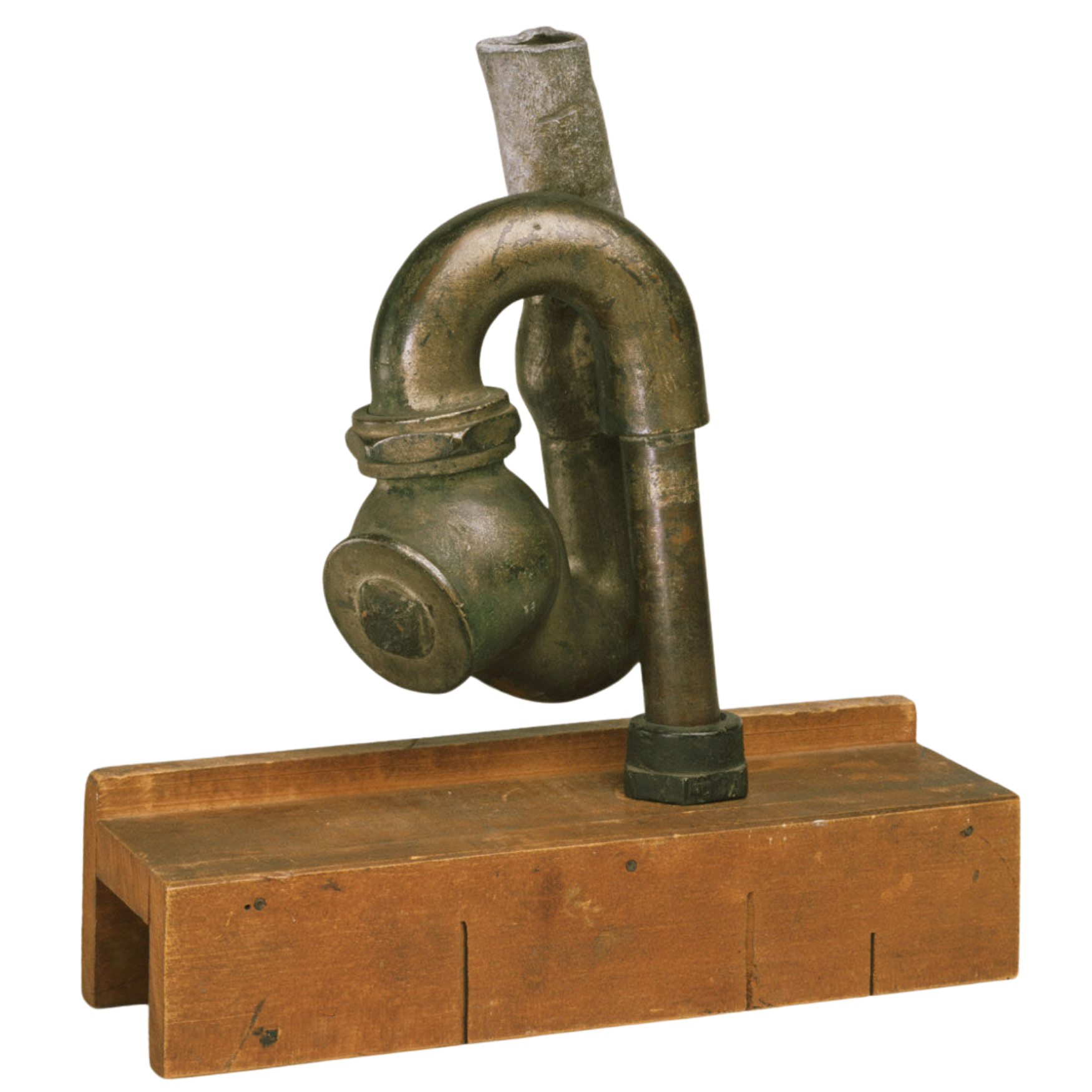
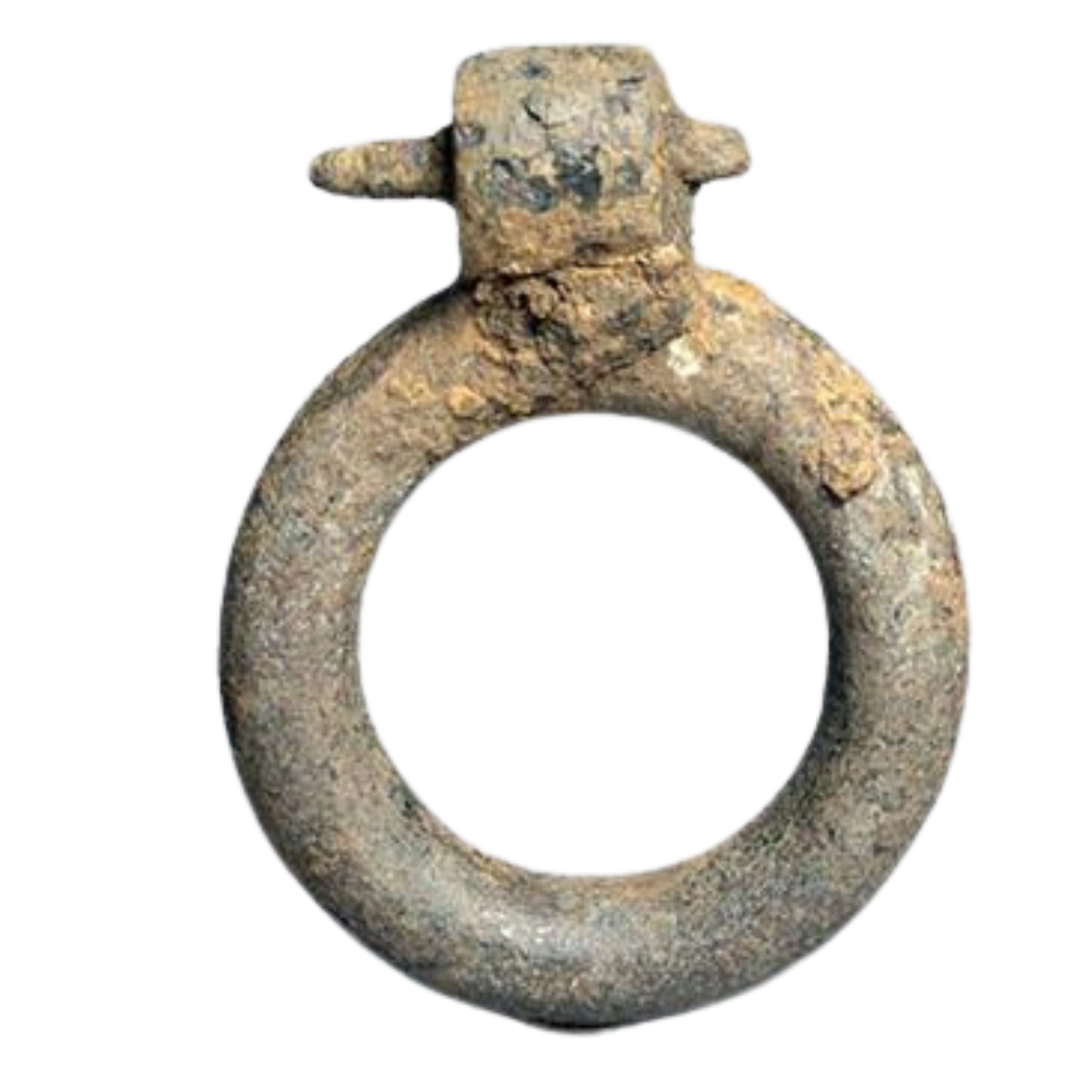
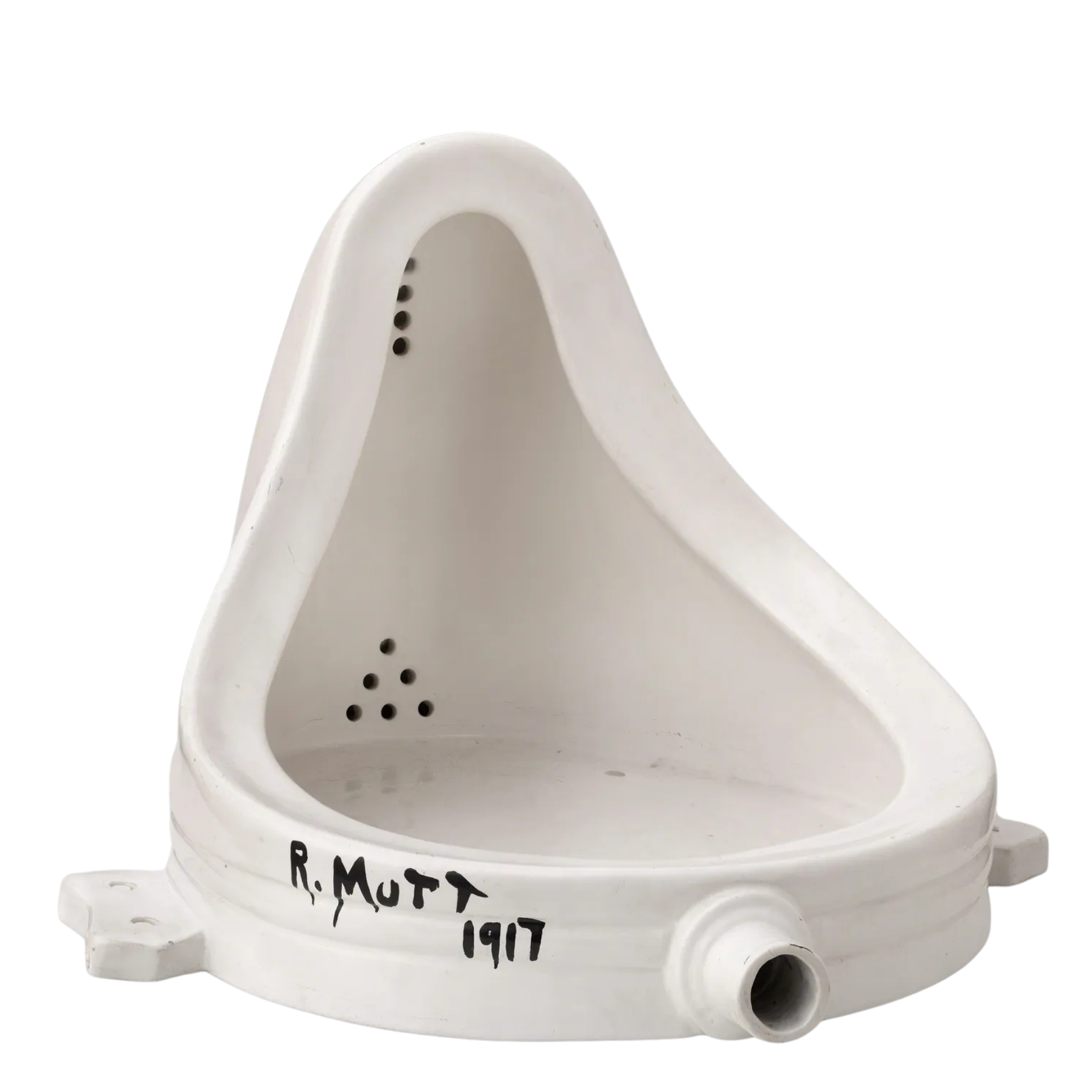
The Baroness was an avant-garde artist and Dada pioneer in the New York art scene. She shook the conventions of femininity with her outfit assemblages, wearing male and female garments and using found objects as clothing. The Baroness was the first artist to use the term “readymade” (before Marcel Duchamp!) to describe her sculptures and critique the art institution. It is even rumoured that she was the one who created Duchamp's famous Fountain. In a letter to his sister he writes “One of my female friends, under the pseudonym Richard Mutt, sent in a porcelain urinal sculpture.” This absolutely floored me. One of her other readymade sculptures titled God was also considered to be made by the artist Morton Schamberg until fairly recently. A sculpture made up of an iron drain trap on a miter box, another plumbing readymade…
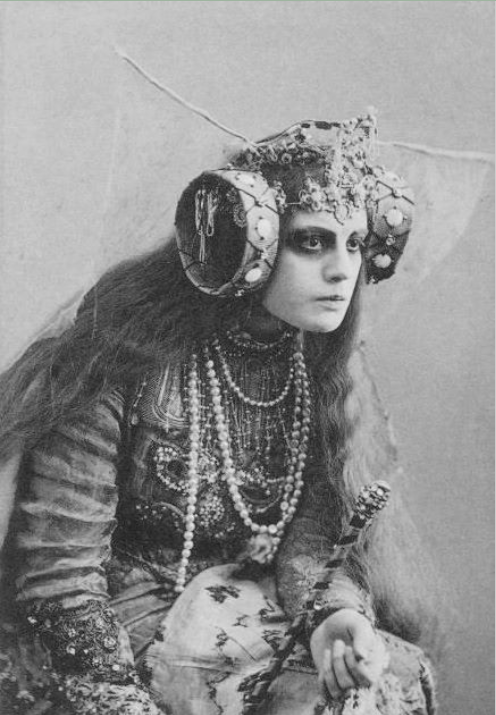
Portrait of the artist in one of her ensembles, making every outing a performance.
Enduring Ornament (1913), the first readymade sculpture.
God (1917)
Fountain by Marcel “Du-shit”? (as The Baroness called him)
Janet Sobel (1893-1968)
Sobel was a Ukrainian artist who immigrated to the US in 1908. It wasn’t until her mid 40s that she took up painting, with no former arts education she painted on whatever was on hand. Sobel was a pioneer of abstract expressionism and was the first artist to make drip paintings. Her son, Sol Sobel recognized his mothers talent and shared her work with artists and critics in New York City. Within a few years she had a solo exhibition at the Guggenheim, her work was praised and then quickly fell from the public eye when her family moved to New Jersey. Clement Greenberg and Jackson Pollock had seen her paintings at Pumas Gallery at a group show in New York before her show at the Guggenheim, Pollock did say these pictures had an influence on him. Yet she is never cited to have been the precursor to his painting style, instead often cast aside as a self-taught artist and housewife who just happened to invent drip painting.
3
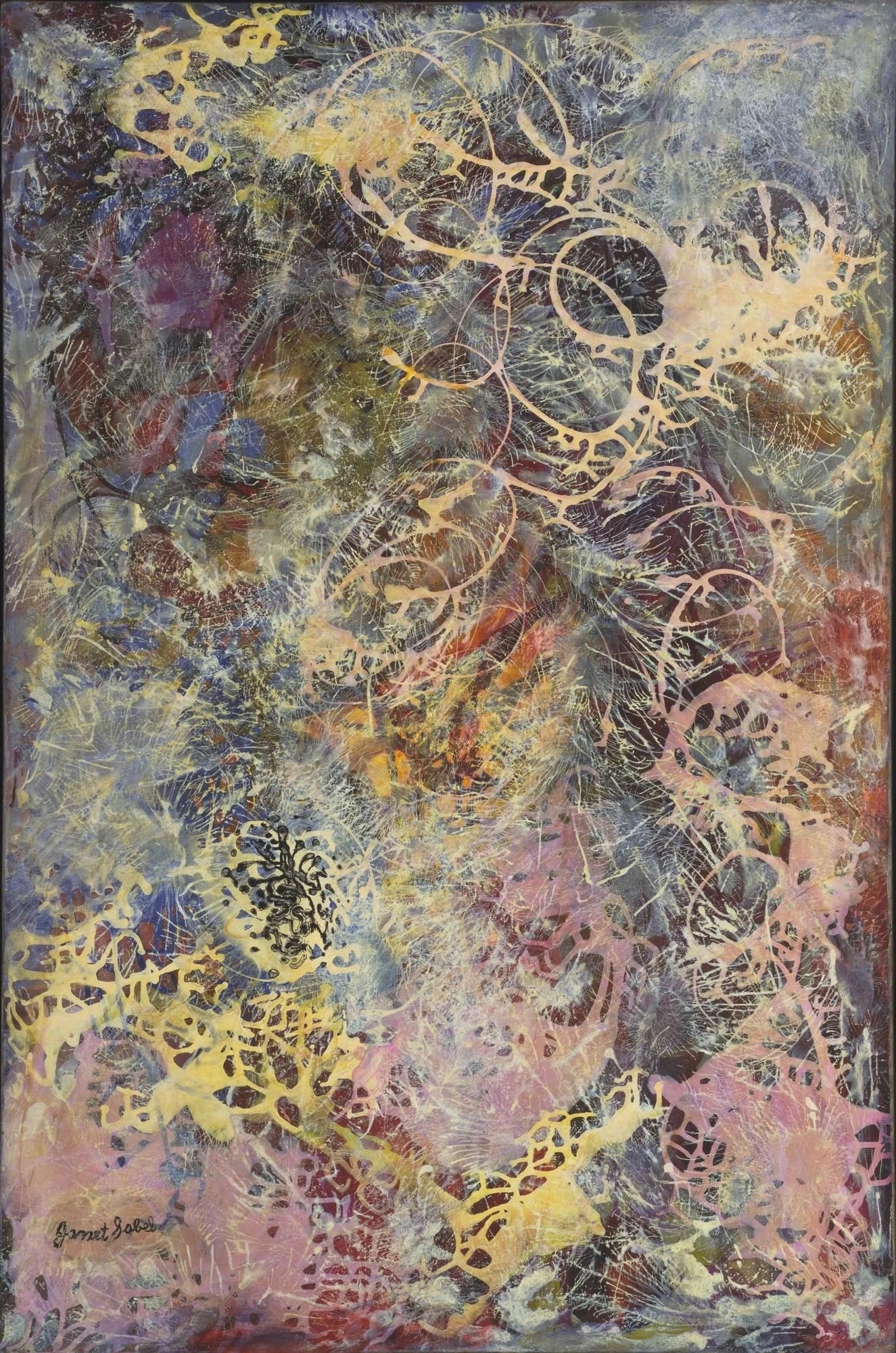
Milky Way (1945)
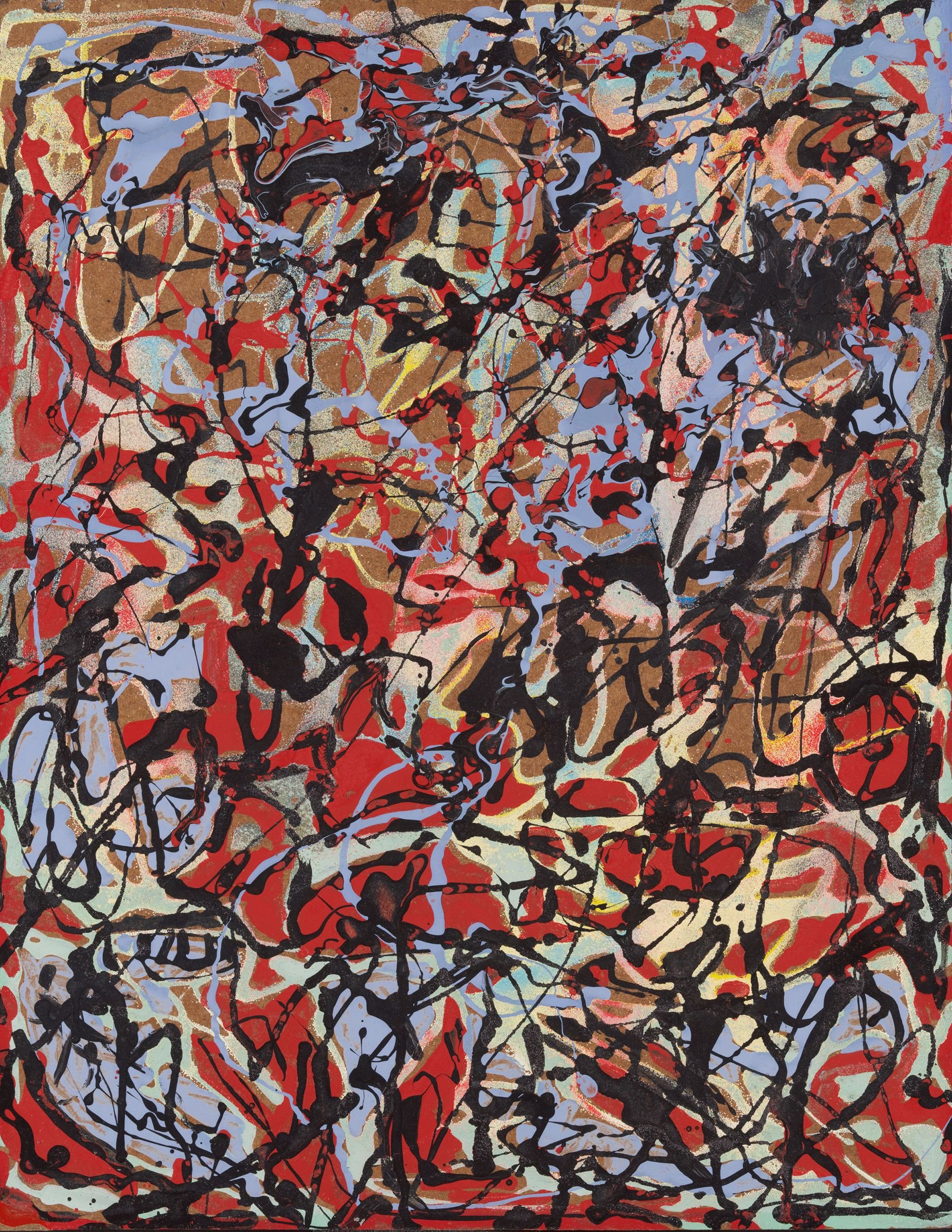
Untitled (1946)
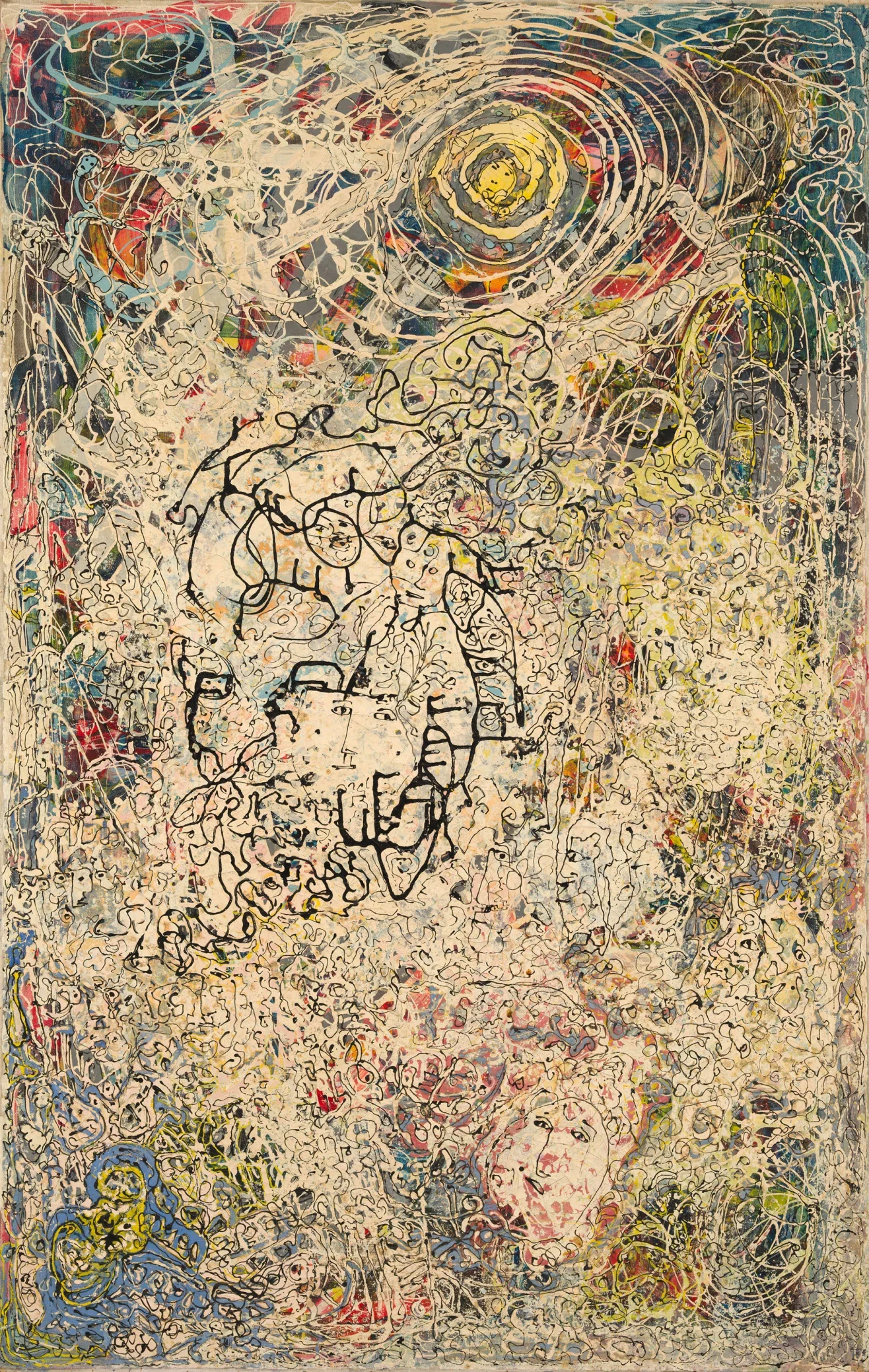
Detail of Heavenly Symphony (1947)
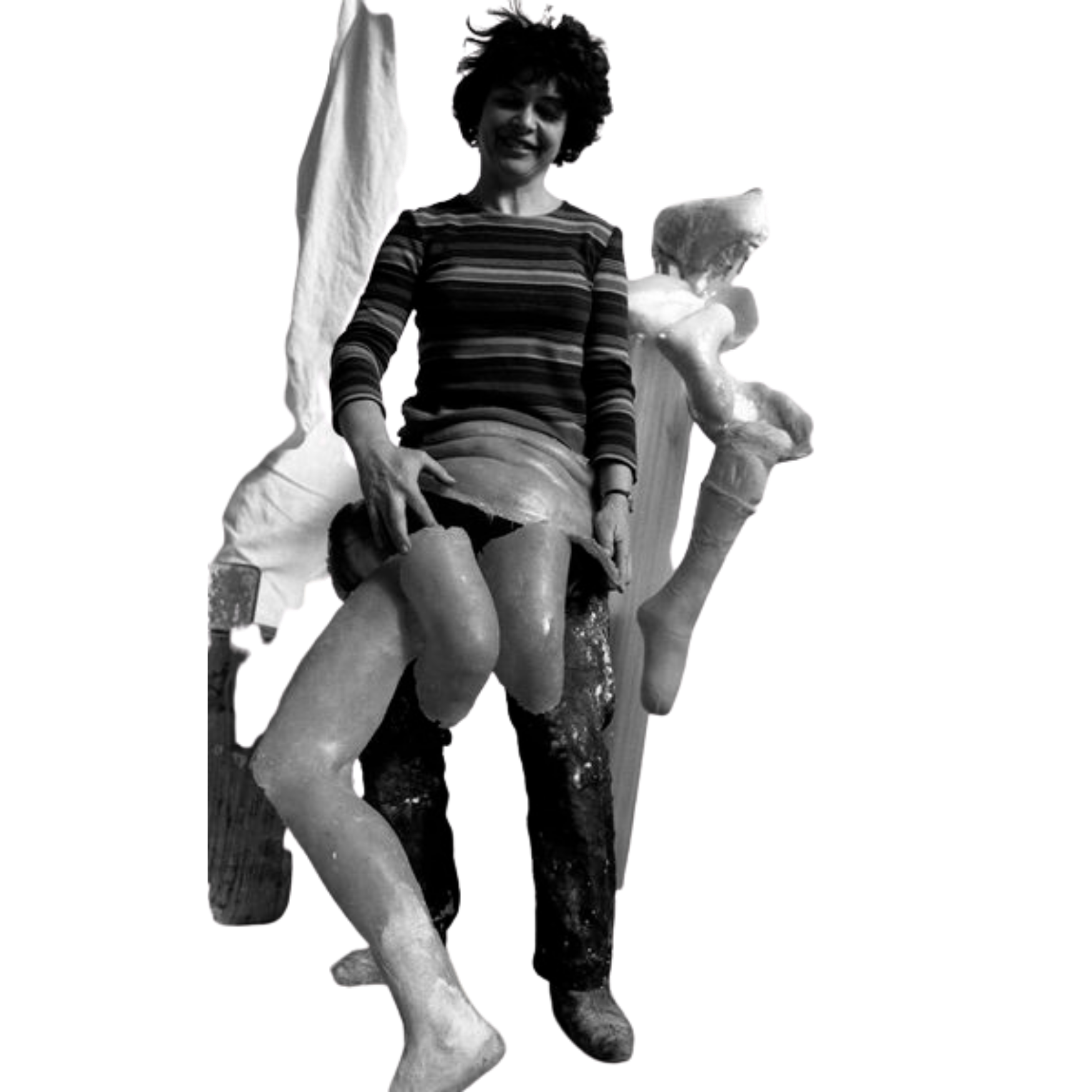
Alina Szapocznikow (1926-1973)
Szapoczikow was a Polish-Jewish holocaust survivor, after the war she moved to Prague and then went on to study art in Paris. She made sculptures by casting her own body, using materials such as bronze, stone, resin, plaster and light. I find her work incredibly powerful, complicated and raw. There are two pieces I’d like to highlight, Trudny wiek (Difficult Age) and the Herbier Cycle sculptures.
4
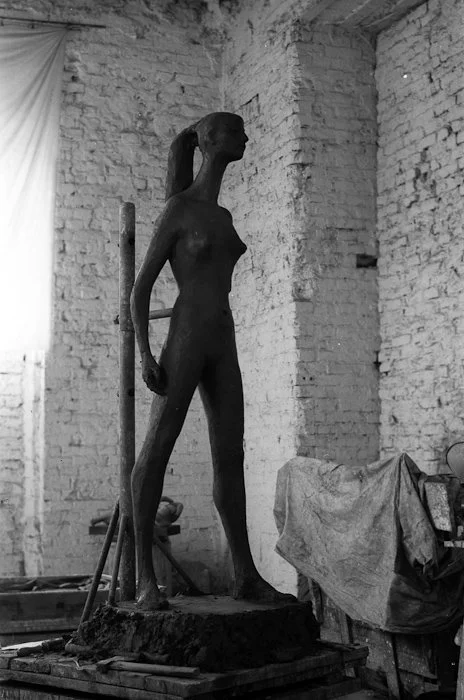
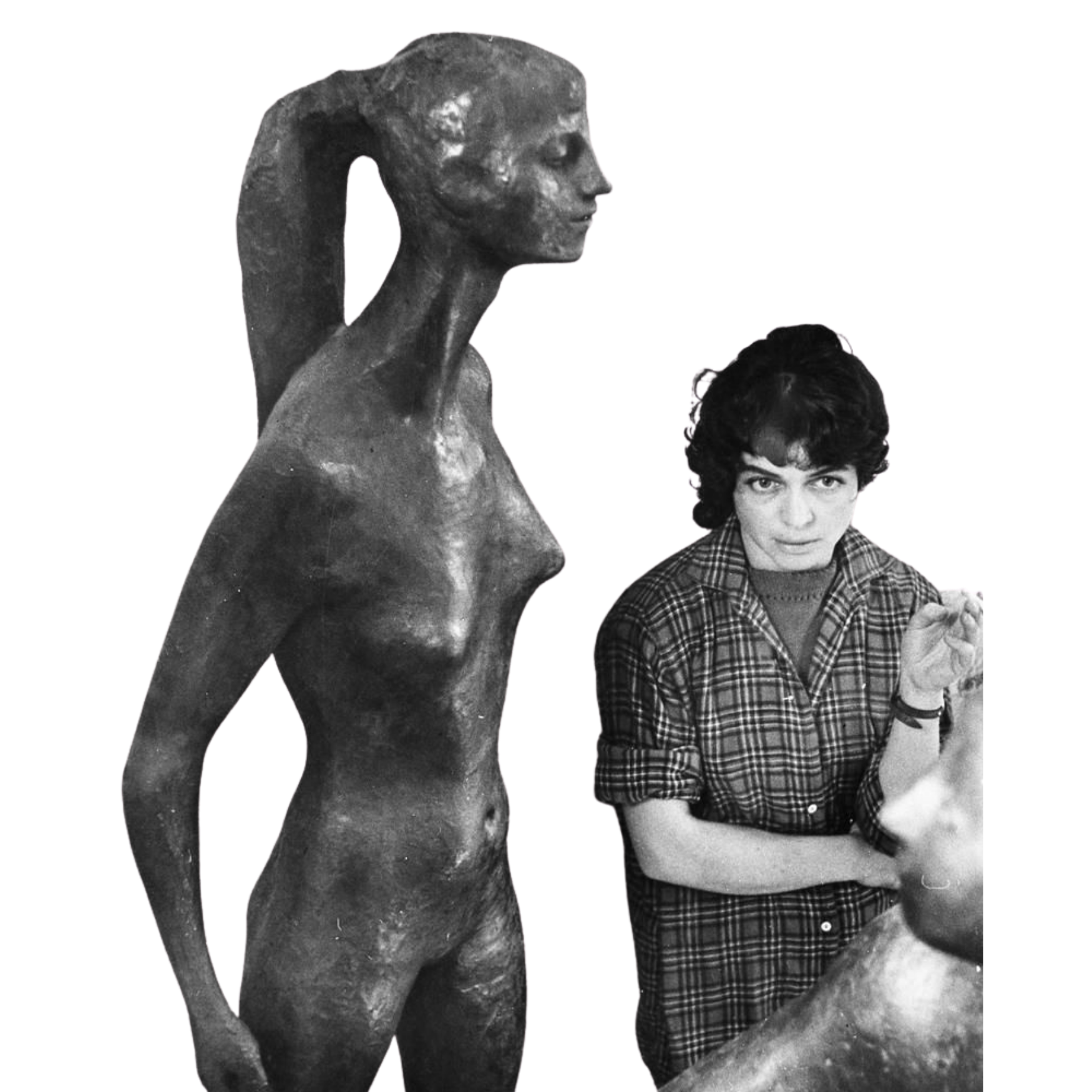
Difficult Age (1956) + the artist
Difficult Age is a bronze sculpture of a girl, she stands on her big feet, stretched as if she’s just grown uncontrollably, she looks about 14. This would have been the age Szapocnikow was living in the ghettos in Poland, right before she was taken to multiple different concentration camps. There is no doubt this was an unimaginable time of life for her. If you negate the biography of the artist, in a general sense, this piece depicts a difficult age for so many girls on the cusp of womanhood. Years later Szapocznikow was continuing to break down the human figure, disassembling cast limps, breasts and lips. One of the many pieces that struck me was Herbier Cycle, a group of polymer casts flattened onto wood board, appearing just as human skin still holding likeness in the face, feet and hands. It is a sculpture that reveals hollowness, stripped of a heart, brain and bones. It comprises of only the essential piece that makes us recognizable to other people, our skin.
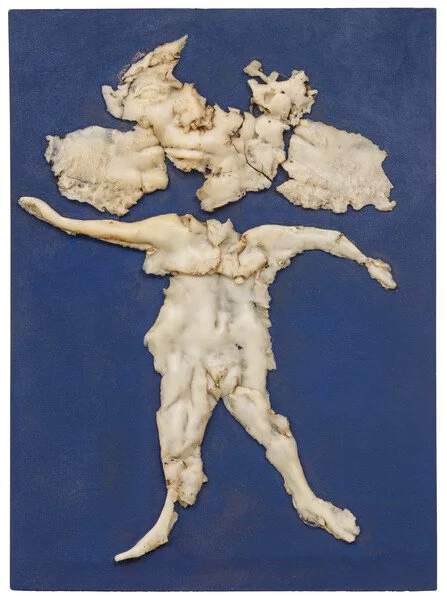
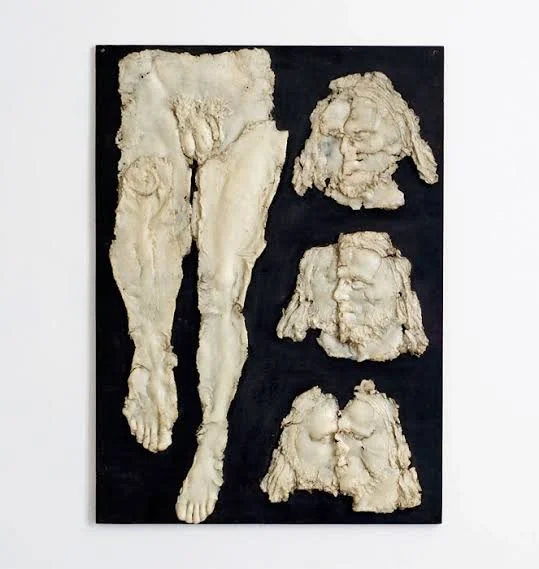
Herbier Cycle (1971-72)
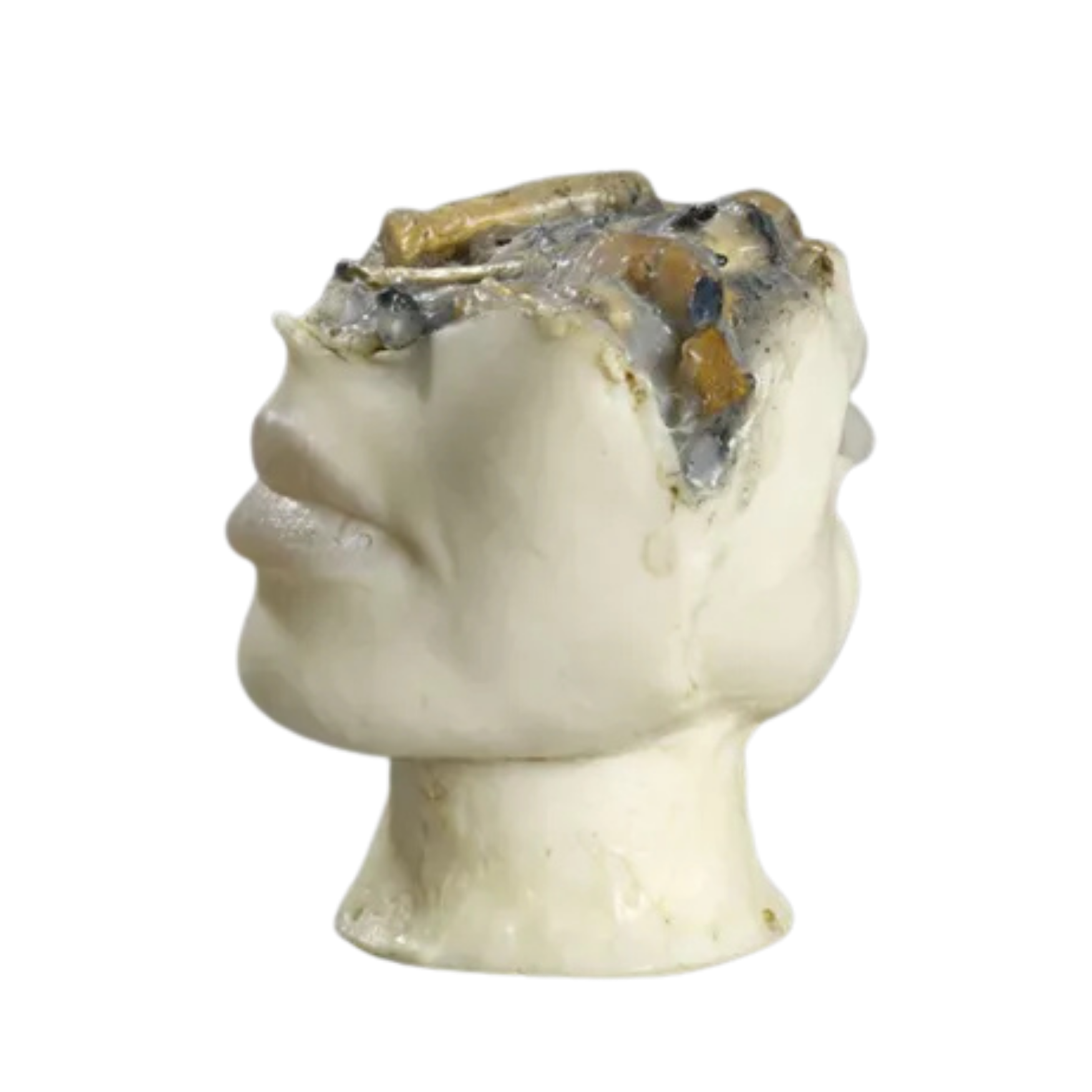
Bachelor’s Ashtray (1972)
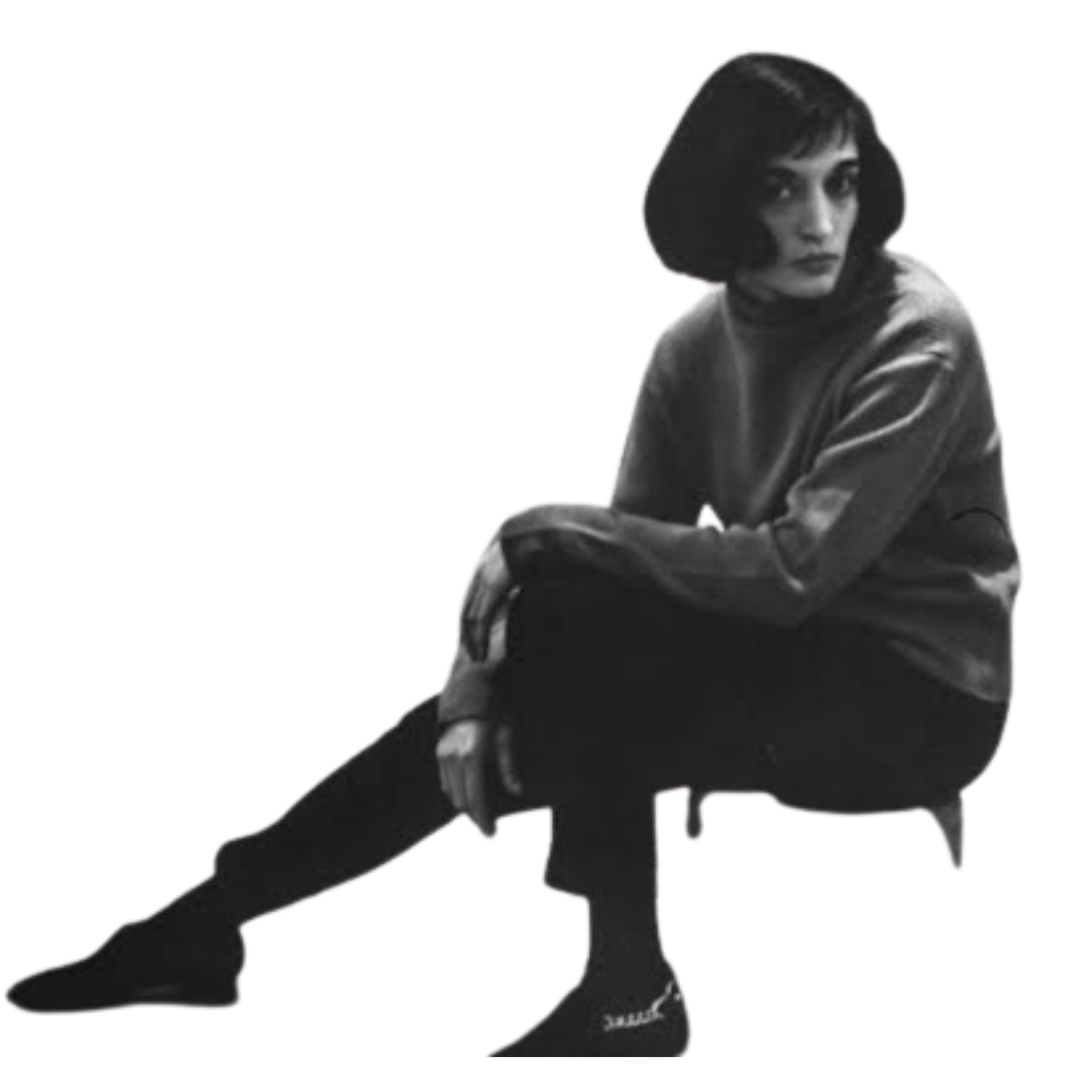
Marisol (1930-2016)
Marisol was a Venezuelan-American sculptor who worked in New York City. She made hand-carved wooden figures displayed with found objects. In the early 1960s she was more famous than her friend Andy Warhol! Marisol’s sculptures critiqued femininity and western ideals in the post WWII era. She combined mediums in a fascinating manner, using wood, drawing and integrating found objects with their own connotations and histories. She was often brought up in the media, critics referencing her as a “latin beauty” eroticizing and sexualizing her, in the 1960s pop-art world dominated by white men, she was not given the serious press I believe she deserved. Marisol said that she used her work to stay grounded, as an effort to hold onto her body and mind. Her sculptures are dark, funny, tender and awkward, showcasing a femininity that works for no one and is at the end of the day, a facade.
5
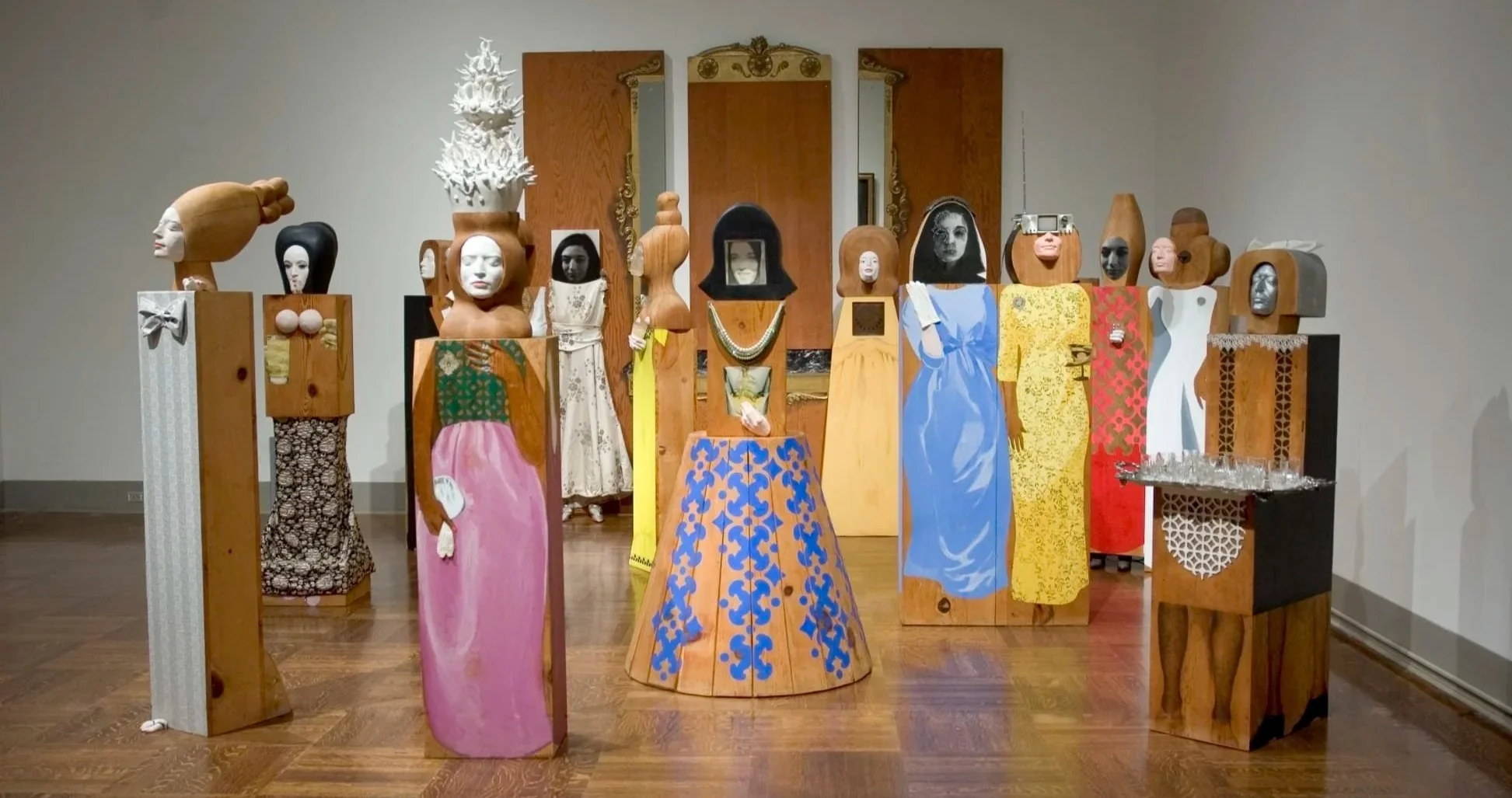
The Party (1965-66)
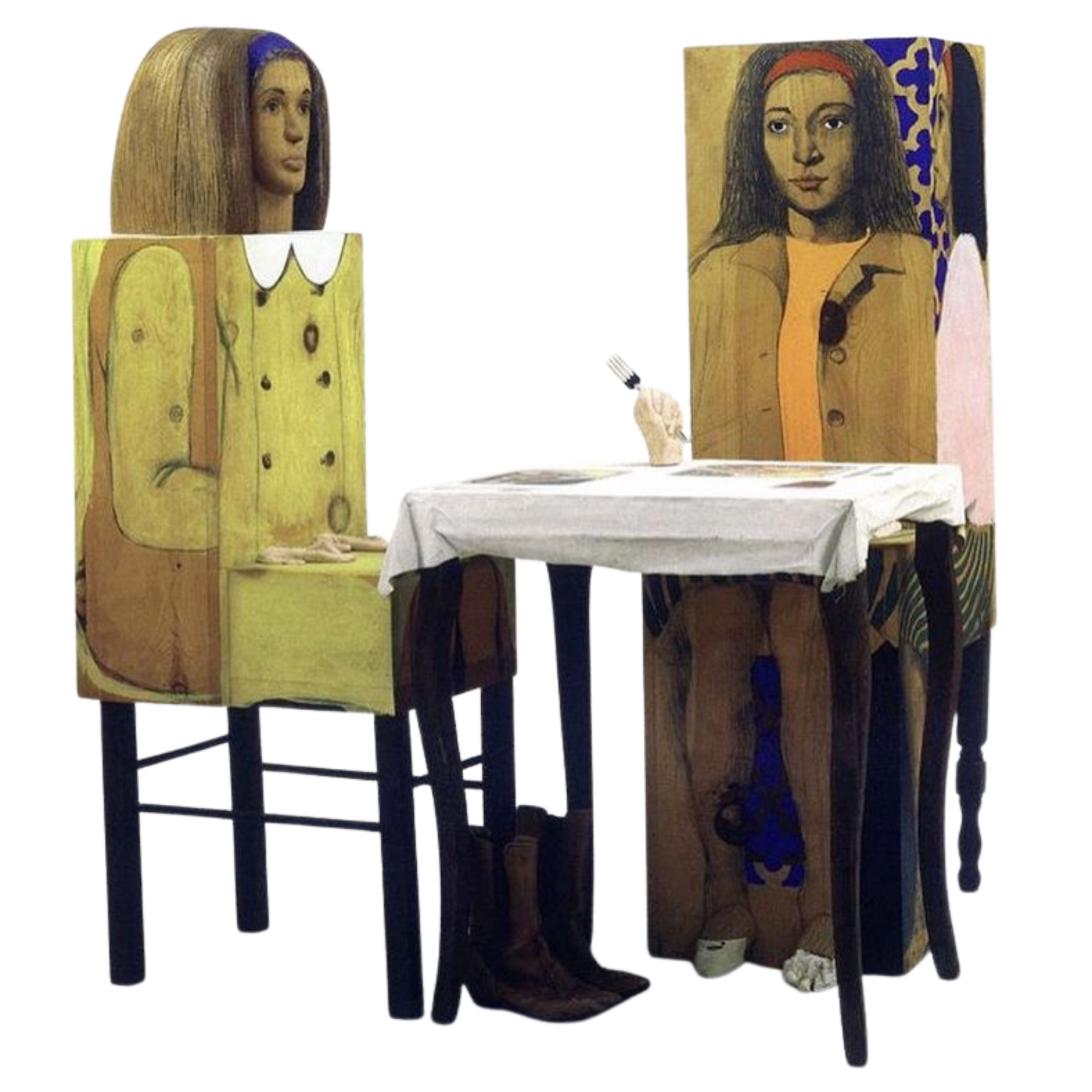
Dinner Date (1963)
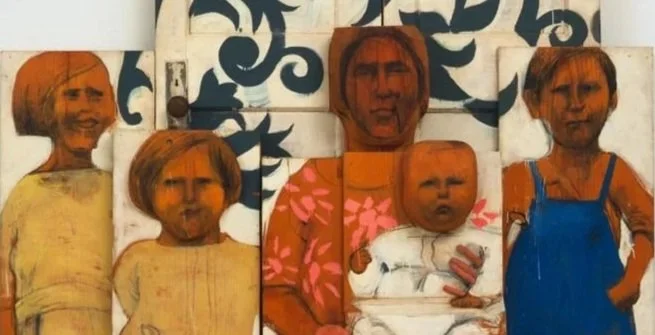
Detail of The Family (1962)
Thank you for reading,
Another journal entry will be up soon. I’m planning to post thoughts and ideas here once a month. If you would like to be notified when a new entry is published, please toss your email below!
BIG LOVE,
Carmen
SUBSCRIBE TO THE ART JOURNAL
A living space of chaos and contemplation.